Showing posts with label Lost History of Eire. Show all posts

Wednesday, December 24, 2014

Lost History of Eire: A.T. Baelor Christmas Letter 1905

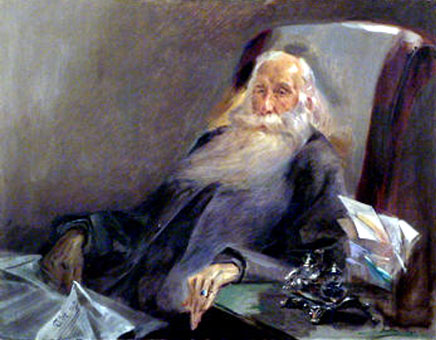
In my research on A.T. Baelor, I found this letter he had posted to his family in December 1905. Apparently he was in the Crimean War. I hadn't known that before. I didn't see it in his DNB entry, though those often leave out things from people's youth. Anyway, it seemed poignant for this year so read it over. He brings up this Níchör of the Silver Bell, again. I think Baelor somehow related to this slippery guy.


*    *     *

This is a fictional work based on characters created by Derek R. Whaley. Copyright ©2001-2014. All rights reserved.

Wednesday, July 30, 2014

Lost History of Eire: Quote from "On the Previously Unknown Peoples of Eire"

"It astounds me that such marvels can still be found in the world today, but I feel confident in making the bold presumption that the creatures that experienced these events were not humans in any manner, but something far smaller, more intelligent, cunning, and perhaps even divine. I hazard to state publicly that these creatures more adequately resemble leprechauns or fairies than anything known to this world. This revelation brings as much sadness to me as joy, in knowing that we, human beings, may have been responsible for such a magnicifent genocide. The loss of such a thing, something previously considered mythology and nothing more, resonates still in our collective consciousness and in our dreams, and we mourn its loss even as we discover new myths to replace those that are gone forever."
-- A.T. Baelor, "On the Previously Unknown Peoples of Eire"

Lost History of Eire: Transliterated Names & Translation

One of the earliest documents regarding this speculative history of medieval Ireland was found in the stacks of Queen's College, Cork. In it, a chronicle attributed to Saint Finbarr, bishop of Cork from the late 500s to 620 C.E., mentions a list of names. Interestingly, according to this alternate history, Saint Finbarr could not have existed as the cataclysm resulting from the eruption of Mount Krakatau in Java occurred prior to his episcopate.

In all likelihood, this list was compiled by Dominic Tierrey, first bishop of Cork and Cloyne following the Reformation of King Henry VIII. It is notable that these names appear in Latinized form rather than in the strange scripts that I have come across thus far. Furthermore, some of the names have contemporary equivalents to known names, though many do not. Whether these names are a further aspect of Henry VIII's replacement of the actual history of Ireland during the medieval period, or an actual translation of the strange scripts, I am not certain. However, the strangeness of the names and the lack of other references to them, either by later historians or by those responsible for the initial fabrication, suggests they may indeed be original translations. Why no other translations have made it to the present is unclear, but hopefully further research will yield results. In any case, these names alone may be enough to translate other parts of the strange script.

List of names of medieval Irish origin (equivalents as asides):
  • Blærné — Blarney
  • Kílkea — Kilkea
  • Môchandroi — Mochachai
  • Zoë — Zoe
  • Malaïa — Maalaea
  • Hûndín — Houdini
  • Macbèt — MacBeth
  • Kaëlí — Kaylee
  • Täegen — Tigger
  • Palég — Pal
  • Salâk — White Sox
  • Nícordör — Niko
  • Síslag — Sizzle
  • Gërchán — Gretchen
  • Mükár — Moocher
  • Särpo — Socko Pocko
  • Mémiath — Memo
  • Ándèrs — Sanders
  • Elenvár — Anywhere
  • Bolí — Booty
  • Bûfroi — Buffy
  • Stûc — Spike
  • Místel — Missy
  • Gäsen — Scratches
  • Rärí — Memory
  • Ófï — Sophie
  • Fanuüel — Fantasia
  • Fûgét — Fuget
  • Lukél — Ike
  • Ínûs — Indy
  • Katín — Katie
  • Sanür — Sandy
  • Zëp — Zee
  • Zäm — Sam
  • Zélphï — Sophie

Lost History of Eire: The Collective Writings of A.T. Baylor

The following comprise the collective writings of Dr. Anthony Theodore Baelor, Baron Baelor of Waterford, as edited by D. R. Whaley, MA, regarding the Lost History of Eire during the years 536 C.E. and 1541 C.E.

Volume 1: Collective writings concerning the dig site at Dunharrow and the subsequent Dunharrow Cache that was thereafter discovered.

  • Introduction: "The Credibility of Anthony, Lord Baelor" by D.R. Whaley
  • "The Dunharrow Cache"by A.T. Baelor
  • "On the Ireland's Lost History" by A.T. Baelor
  • "On the Medieval Geography of Ireland" by A.T. Baelor
  • "On the Lost Language of Eire" by A.T. Baelor
Volume 2: More essays concerning the dig site at Dunharrow and the recent findings In the Ruins of Cork regarding the now-defunct Ivernian Society.
  • "On the Discovery of the Cork Fragments, and their Importance in Reconstructing the Missing History of Eire prior to 1541 C.E." by A.T. Baelor
  • "On the Blarney Stone" by A.T. Baelor
  • "On the Divisions of Eire between the years 550 C.E. and 1541 C.E." by A.T. Baelor
  • "On the Sundering of Eire" by A.T. Baelor
  • "On the Possibility of Magic in the World" by A.T. Baelor
Volume 3: Recent discoveries and unpublished essays from the Lusitania wreckage, so-titled What Lies Beneath.
  • "Essays found in the Lusitania Safe" by D.R. Whaley
  • "On the Previously Unknown Peoples of Eire" by A.T. Baelor
  • "On the Legends Passed Down to the Present" by A.T. Baelor
  • "On Kingship within the Lost Realms of Eire" by A.T. Baelor
  • "On the Fate of the Lost Peoples" by A.T. Baelor

Lost History of Eire: A.T. Baelor Christmas Letter 1908

23 December 1908
Happy Christmas,      

The snow falls heavy on the grassy field outside my front door, but it is nice and warm by the fire-side. Bah! The years have grown tiring in their passing. Not long ago I remember the joys of a chill winter breeze through the hills, but now the bitterness outweighs the merriment. My bones ache with memories of those bygone decades. I am eighty-four years old now, and I feel it in every ache and crack.

But enough glum thoughts from me. These do not warm minds as a hardy fire warms toes. During my recent excavations, I found a fragment of a story and I thought that during this Yuletide, it would be good to recount. Perhaps you can find some inspiration from its medieval message, though I daresay the peoples differ much from us...

Many ages past, there was a great warrior. Well, perhaps he was merely exceptional for he had but one gift: he was a trickster. He went by the name of Níchör and he was the child of a cobbler, as so many of us were in those times. But Níchör was no cobbler; no indeed, he rarely even wore shoes because he preferred to sneak about unnoticed.

One cold Yule-eve in the far southern borough of Carrick, Níchör thought to himself, “Wouldn’t it be fun to have the whole town outside on this cold night in naught but their knickers?”

Níchör silently left his warm home in nary more than an overcoat and top hat, all of the darkest green naturally. His wild orange hair escaped the confines of his cap to scatter about his collar. By the time he reached the back stair of the town hall, small icicles had begun to form about his short stubble. Climbing a hidden ladder, the naughty little man reached the top of the bell tower that sat astride the hall, and with one great heave, he rang the large cast iron siren, prompting chaos throughout the hamlet.

Droves of people streamed out of their warm homes, abandoning hearth and feast to prepare for the worst. Yet no army fae or foe appeared. Behind a nearby barn, though, the hysterical laughter of a self-indulgent man led authorities to the culprit.

On the following morrow, the town court convened and sentenced young Níchör to a punishment equal to the offense: henceforth, until such a time as he proved himself worthy of reprieve, the man would wear a bell about his collar so as all would know the manner of his crime. And for the rest of his days, all knew whence Níchör of the Silver Bell came and to where he would go.

Regrettably, this story appears to end here, though Níchör himself appears in many later tales. Still, it seems his greatness came long after, though his reprieve came later still.

Keep warm and safe this Christmas. As always, I am
A. T. Baelor

Lost History of Eire: Excerpts from the Anglo-Saxon Chronicle

While researching Anglo-Saxon history, Dr. Baelor stumbled upon a collection of early medieval manuscripts at a parish church near the township of Durham in Northumberland. One of the manuscripts read cronica duo Anglica as its title and I now believe that this manuscript is the same as the missing Anglo-Saxon Chronicle that acted as the record for northern England during the reign of Alfred the Great. This version of the chronicle was last recorded in the mid-twelfth century at a monastic library in Durham before disappearing from all records.

Interesting among all the copies of the Chronicle still in existence, this version includes expanded sections of the period in which our story now relates. I personally have not viewed the cronica as Dr. Baelor did not give a detailed explanation of its location. However, he did copy over into English the entries for A.D. 526, A.D. 527, and A.D. 529. Among these, a better picture of the plight of Eire can be determined:
"A.D. 526. This year darkness overtook the sun and the crops failed. Famine and pestilence took over the lands and many died. Refugees from Eire arrived on the west coast but none could support them.
"A.D. 527. This year Cerdic and Cynric fought with the Britons in the place that is called Cerdic's-ley. After this the waters around Britain retreated far out into the sea and the darkness ended. Great waves returned late in the year, crashing upon the shores and flooding the fields. Famine and pestilence again overtook the lands and many more died.
"A.D. 529. This year bodies washed ashore on the west coast. The dead looked to be Gaels from Eire, but none would touch their bodies. The stench of the corpses remained for many months until the bodies were washed back out to see. Smoke was seen off the coast toward Eire and it is thought that a great burning had decimated the land."
No other entries made mention of Ireland again and it is thought that all communication with the wayward isle ceased following 526. Communication with the Isle of Man was restored in the middle of the twelfth century and is recorded in the same chronicle as an obscure entry:
"A.D. 1134. This year a delegation from over sea came to Lancaster to petition King Henry for an audience but he was denied. The men returned to the sea on a large ship and were not seen again."
It can be guessed that this "delegation from over sea" was likely representatives from the Isle of Man who had finally achieved adequate ship craft and a large enough population to risk a voyage. The fact that they were denied suggests Henry was otherwise occupied with matters of state. His death the following year and the descent of England into the Anarchy explains why no further mention of these diplomats appears in the text. The last entry in the Chronicle is 1154 and one must look to other sources to find further information on the matter.

Lost History of Eire: Excerpt from the Manx Chronicle

The following is an excerpt from the The Manx Chronicle, compiled around A.D. 927 by Demetrus, Bishop of Mann. The author of this specific passage is unknown but the passage, if accurate, was written around A.D. 540 by probably a monk of a monastery that later became the Cathedral of Saint German on Saint Patrick's Isle. Little is known of the early Celtic monastery, but if my predictions are true, this location may have been the first permanent settlement of exiles from Ireland following the chaotic events of A.D. 536. This excerpt is heavily edited from the original due to various translation errors. A better translation is forthcoming
"September 537 anno domini. Flight again takes us. We have been in such a situation since the plague first spread among the elders three months ago. I have lived many days but never seen a year without sun. With no rain and no crops. It is dark even during noontime. We left another thirty men behind yesterday, with countless women and children to add. Our party is reduced to sixty-two men and women. We abandoned all the children and now only flee with the fittest among us. If doubt we will find more survivors in this unbearable hell. Every town we pass is desolate. Bodies often are found rotting in the streets.
"Corfel is leading us to a refuge his father one knew. It is docks hidden among the ledges of the Giant's Causeway. All of us survivors are weary but we are well and alive. The last of the cursed are dead or dying, and we are all who remain.
"November 537 anno domini.  The Causeway appears more barren than of recent years, leading far out into the tepid sea. Indeed, as I watch it, the sea continues to recede into a bleak nothingness. An ancient stone path, the elders, now gone, called the Giant's Causeway, and so it seems, disappearing into the Irish Sea. Pancaked hexes form a straight road far into the sea toward Leogrï and Cumbrï. I fear to walk across such an unnatural plain.
"The ships of Corfel's refuge lay haggard atop stones, so ruined as to appear a graveyard of timbers. Whether by the recession of the sea or due to earlier calamity, the ships are no longer an option lest Corfel wishes to build a ship anew atop the muddy mire of stone and sand. Living fish splash on bare earth urging us into the bereft sea bed.
"As Moses crossed the Sea of Reeds so too do we journey on land that should be water. Thick mud sticks to our shoes and sinks to our ankles yet we continue onward, hoping beyond hope to avoid Pharaoh's fate, and to escape our land of captivity so that we may arrive in a new Paradise, free from pestilence and darkness. May God protect us and keep us in this dark night. Amen."
I hope that further analysis of passages from other early chronicles produce equally strong sources of information on the calamities that befell Ireland in and around 536 C.E.

Lost History of Eire: "Baelor, Anthony, 1st Baron Baelor" [DNB]

Baelor, Anthony Theodore, first Baron Baelor (28 February 1824, Riga, Latvia – 7 May 1915 off the coast of Ireland near Kinsale), Ph.D., KP, FRHS, JP, DL, Irish businessman, historian, and Liberal politician.

Baelor Ancestry and Childhood
Anthony Baelor was the second son of Arthur Patrick Baelor, an Irish merchant living in Latvia, and a Clancy Margaret Dunlow of Waterford. His paternal grandfather, Eustace Perceval Baelor, was vicar of Ballybricken in Waterford. His maternal grandfather, Michael Joachim Dunlow, was a farmer in Kilkenny. Baelor was born while his parents were on a business trip to Riga, Latvia, a province of the expanding Russian Empire. His family remained in Latvia for the next fifteen years, only returning to Waterford, Ireland, in the autumn of 1839. During his time in Latvia, Baelor learned Russian, German, Polish, French, Italian, and Latin, in addition to English and Irish Gaelic. His ability to learn languages proved to be a strength later in life.

Upon his return to the United Kingdom, Baelor completed his primary education and began studies in theology at Trinity College in 1848. To enter the college, he had to renounce his Catholic faith and accept the Church of Ireland. He did so reluctantly but the action haunted him for much of his life. When the Crimean War broke out in spring of 1854, Baelor dropped out of school and offered his assistance to the military as a translator, having learned Russian and French while living in Latvia. He remained a translator throughout the war and relocated to Paris to negotiate the peace treaty in 1856. When the treaty was signed, he returned once more to the United Kingdom and applied as a doctoral student to Cambridge University. He earned his degree in 1860.

Business and Political career
Baelor settled in County Waterford in 1862. There he founded the Anthony Baelor & Company shipping line, which specialized in exporting consumer goods to the Americas. The company subcontracted to major ocean liner companies, which would prove to be Baelor's undoing many years later.

Baelor was Member of Parliament for Waterford City between 1868 and 1873 and for Waterford County from 1880 to 1885. He held the office of Justice of the Peace and Deputy Lieutenant of Waterford.

Career in History
Baelor was invested as a Fellow of the Royal Historical Society in 1887 following research into Early Modern origins of the modern Irish state, especially in the area surrounding Cork and Waterford. Until 1895, Baelor was considered an exceptional historian and was considered one of the top in his field. It was while researching the origins of Blarney Castle in 1895 that Baelor's health went into decline. He was taken to Mercy University Hospital in Cork where he spent six weeks recovering from a minor stoke. While Baron Baelor emerged, he was a changed man. His health continued to fluctuate throughout the last two decades and most medical doctors of the time surmised that he had gone mad.

The Apparent Madness
Baron Baelor's theories regarding the early history of Ireland became muddled in a fantastical universe of strange languages and beings. From 1897 until 1904 he was known to discuss such strange topics as lost histories of Ireland and a significant cover-up committed during the Tudor era. He provided little evidence for these theories though he did publish an essay to the little-known Limerick Field Journal entitled "On the Mythical Origins of Blarney Castle" which presented an implausible theory on the importance of the Blarney Stone to pre-Tudor culture. He followed this essay with another, published a year later in 1899, entitled "Theories on the Medieval Peoples of Eire". These essays remained obscure and those friends of Baelor chose mostly to ignore them, regarding them as ramblings of an aged man.

Baelor became chief editor of the Journal of the Ivernian Society when it went into print in 1908. He used this magazine, as well as the Journal of the North Munster Archaeological Society, with which he had many connections through his archaeological work at Cork, as a springboard to announce further theories from his supposed research. By this time, his writings had become more coherent but disturbingly illogical. His last known publication, printed in October 1914, was entitled "On the Language of the Fae" and discussed such absurd notions as an alternative history of the middle ages in Ireland in which no humans lived on the island. No evidence supported his findings and he was publicly declared mad. Later unpublished material found in his personal collection suggested a long loss of mental stability resulting from his stroke.

Death on the Lusitania
Baron Baelor's luck ran out on the fateful afternoon of 7 May 1915. Through his shipping consortium, Baelor & Company, the baron had arranged transport of weapons to Europe via the United States. He had earlier arrived in New York to conduct a public lecture and speak with some former students now lecturing at Columbia University. He arranged a return transit via the Cunard Line ship, the RMS Lusitania, which departed on 1 May. His munitions were loaded and Baron Baelor boarded the ship bound for Cork, where he planned to be dropped off before his cargo was delivered to Liverpool.

At 2:10, the Lusitania was torpedoed by U-20 of the Imperial German Navy. The torpedo slammed into the hold, detonating the munitions stash of Baelor's and destroying the ship. Baelor drowned in the sinking and with him was destroyed many of his personal effects including what is thought to have been over a dozen unpublished essays regarding his absurd theories on the early origins of Ireland. He was without issue and on his death, the barony became extinct. He bequeathed money for a chair of History at Trinity College and a ward in a hospital.

The British government decided to overlook his late madness and made him one of the last members of the Order of Saint Patrick posthumously. His earlier historical works remain important documents and a lecture series was later developed by his trustees entitled the Baelor Illustrated Lectures at Trinity College.

-- D.R. Whaley